Key takeaways
- Norway and Sweden lead on exclusions, but in different ways.
- Denmark and Finland take a more moderate approach.
- We place strong emphasis on meeting different client preferences.
- We offer institutional clients a second opinion on their sustainability policy.
Institutional investors in the Nordics usually share a strong commitment to responsible investment, and there is a persistent perception that Nordic investors often speak with one voice. A new Danske Bank Asset Management 2025-2026 survey of 184 Nordic asset owners suggests otherwise.
“We tend to talk about a common Nordic approach to exclusions, but in practice the differences are quite pronounced. How sustainability exclusions are applied in investment policies differs materially across the region and types of asset owners,” says Erik Eliasson, Head of Responsible Investment at Danske Bank Asset Management.
Norway and Sweden: Lead in different ways
Across the four Nordic countries, Norway and Sweden in many areas stand out as the most restrictive, but they do so in notably different ways.
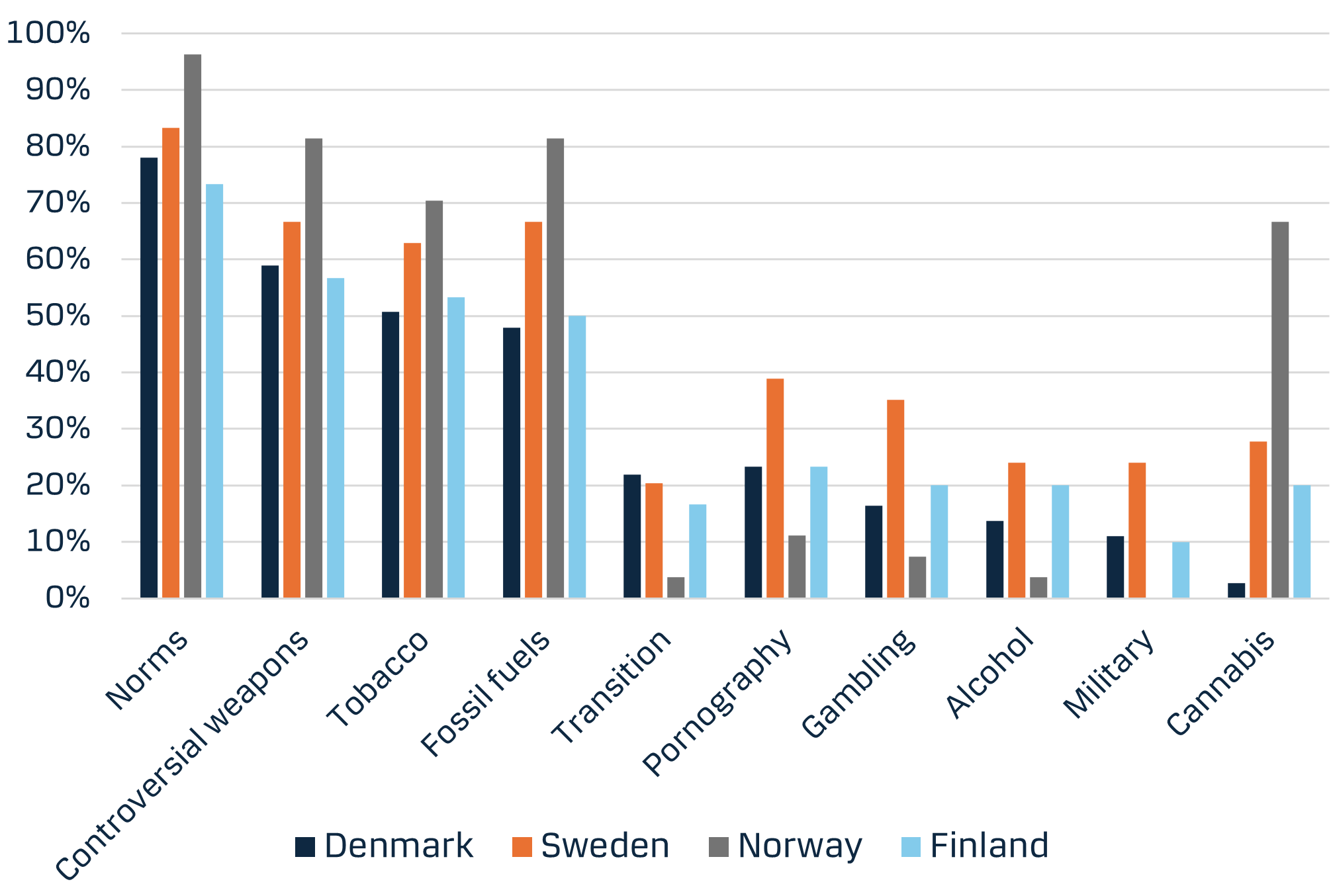
Norway stands out on the more traditional exclusion categories, with the highest use of restrictions related to norms, controversial weapons, tobacco, and fossil fuels*.
“Sweden is consistently restrictive, but its profile is broader across a wider mix of categories and especially pronounced in several more values-based categories such as alcohol, gambling and pornography. Also, Sweden is the strictest country on military, despite having a sizeable defense sector, including Saab,” says Erik Eliasson.
By contrast, Norway actually has the lowest use of restrictions in several of these more values-based categories.
Share of asset owners using exclusions by category
The transition category captures the share of asset owners that exclude fossil fuels while still allowing investment in companies in transition.
Source: Danske Bank Asset Management.
Denmark and Finland: A more moderate line
Compared with those two, Denmark and Finland appear somewhat more moderate in their use of restrictions, not least in the more traditional exclusion categories.
Finland generally sits close to Denmark, though often slightly above it in the more values-based categories.
While 48% of Danish asset owners in our survey exclude fossil fuels, almost half of them — the highest share in the Nordics — make exemptions for companies that are transitioning in line with the Paris Agreement. Denmark therefore stands out in a Nordic context when it comes to combining backward-looking, revenue-based exclusion metrics with forward-looking perspectives such as transition analysis.
“At the end of the day, Nordic investors may speak with one voice on the overall importance of responsible investment, but in practice they exclude with very different rulebooks. That is why, at Danske Bank Asset Management, we place strong emphasis on offering different investment products catering to many different client preferences,” says Danske Bank Asset Management CIO Thomas Otbo.
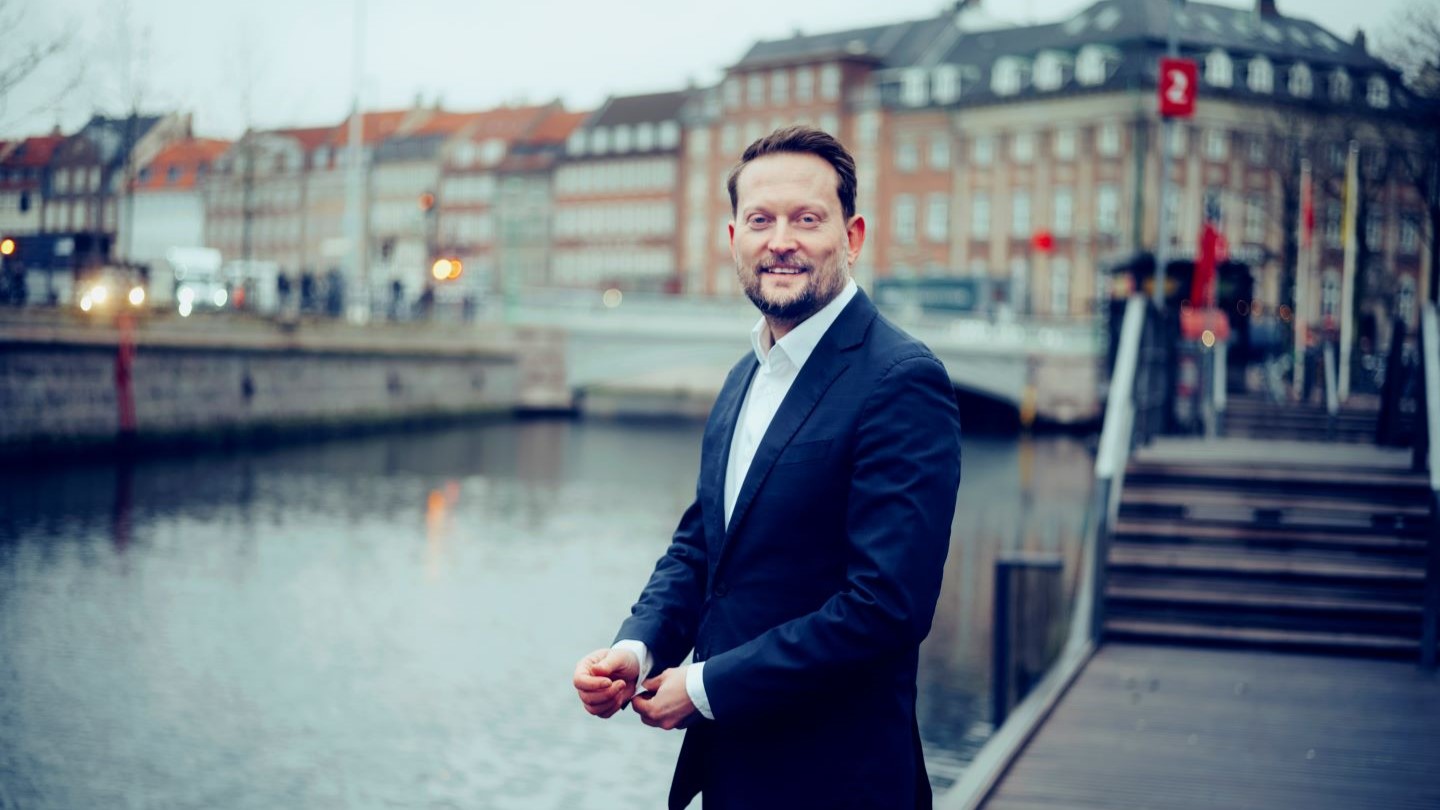
Erik Eliasson, Head of Responsible Investment.
Get a second opinion on your sustainability policy
Drawing on our extensive data, we have developed an analysis specifically for asset owners to provide relevant data, perspectives and a basis for discussions at board and investment committee level, as well as for investment policy adjustments.
“We encourage institutional clients to reach out to their client manager if they would like a presentation of the analysis, including a second opinion on their own policy,” says Erik Eliasson, Head of Responsible Investment.
*In Norway, fossil fuel exclusions apply exclusively to coal - not oil and gas.
This publication is marketing communication and has been prepared for informational purposes only and does not constitute an offer or solicitation to make an offer to buy or sell any financial instrument.

